The Big Bait and Switch: Navigating the Maze of the American Healthcare System

When you are already living in a state of physical decline, every single decision feels like a high-stakes gamble. My journey toward understanding what was happening to my body, the stumbling, the mumbling, the profound and unexplained fatigue, was already turning my life upside down. But nothing could have prepared me for the bureaucratic nightmare that awaited me just around the corner.
After choosing my first doctor and leaving that initial appointment even more confused, frustrated, and burdened with the terrifying thought that I might have Multiple Sclerosis (MS), I hit a brick wall. The next steps in my diagnostic journey required something I didn't have: comprehensive health insurance.
Looking back, the entire ordeal seemed almost absurdly cruel. In order to afford the specialized testing I desperately needed, specifically, the MRI that could confirm or deny the looming specter of an MS diagnosis, I couldn't just pay cash. The numbers were astronomically out of reach. And so, out of sheer necessity, my health journey took a mandatory detour into the labyrinthine world of health insurance providers.
I won’t elaborate extensively on my search for health insurance here. Suffice it to say, navigating that market was an exhausting, soul-crushing endeavor that easily provided enough material for a whole book in itself.
The Illusion of Choice
Jump forward a few weeks later. After countless hours on the phone, combing through fine print, and wading through bureaucratic red tape, I finally found an insurance policy that I could use immediately. There was, of course, a massive catch: a huge deductible that meant I would be paying heavily out of pocket anyway, and a strict, restrictive network.
The most frustrating part? I had to choose a doctor exclusively from their list.
I had already been traumatized by this process once before. The sheer emotional and physical labor of researching a doctor, trying to find someone I felt remotely comfortable with, scheduling my very first medical appointment in two decades, and finally walking through those doors, it was an experience I dreaded enduring. And now, the universe was forcing me to put it on repeat.
I sat down with the insurance provider’s directory. As I scanned the names, a cold sinking feeling settled in my stomach: none of the doctors on this list were anyone I would have ever chosen under normal circumstances. They felt cold, corporate, and entirely disconnected from my humanity.
But time was flying past, and the mounting stress was visibly contributing to my physical decline. My body was getting weaker. Desperate, frustrated, and running out of options, I pulled out the provider list, closed my eyes, and practically pinned the tail on the donkey.
Really, the deciding factor came down to logistics: it was simply the first name on the list that had an appointment available within a reasonable amount of time.
Before I knew it, the calendar page turned. We were well into the new year, 2012. It had now been over two years since my very first stumble and mumble. Over two years of living in a state of agonizing limbo.
The Cost of a Single Appointment
As the date of my appointment with this new, insurance-mandated doctor approached, the familiar, exhausting routine set in. The days leading up to the visit were carefully choreographed to conserve my rapidly diminishing energy. I spent days resting up, preserving my strength, and purposely exercising my legs just to prepare for the physical demand of walking a long distance from the parking lot to the office.
This is a hidden reality of chronic illness that healthy people rarely understand: for someone in decline, a single medical appointment doesn't just take up an hour of your day. It robs you of an entire week of your normal life. The recovery time required just to endure the exertion and the stress is monumental.
And then, the day arrived.
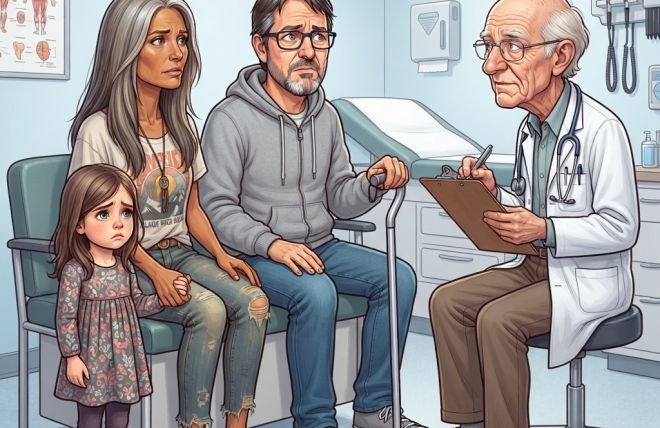
I was heading into a sterile environment to have my body probed and evaluated once again. But this time, the discomfort was infinitely worse because I had no agency in the matter. This wasn’t the cozy, slightly reassuring family doctor setting of my past.
Instead, my partner and I pulled up to a massive, imposing corporate building featuring a sprawling directory that would easily confuse a rocket scientist. We navigated the echoing corridors until we found our destination: Office Suite 341. It was tucked awkwardly back at the very end of a long, industrial-style system building.
It was right then, standing in that bleak hallway, that a cold realization washed over me. I wasn’t a patient seeking healing. I was a number with no name.
The Assembly Line of Modern Medicine
Pushing open the heavy glass door, we stepped into the waiting room. The air was heavy, trapped between harsh cinder block walls that offered no warmth or comfort. The room was packed with a gang of other people, young and old alike, all looking visibly sick, hacking, coughing, and God knows what kind of germs they were spreading through the stagnant air. Even the administrative staff remained safely behind a thick glass partition, completely walled off from the human suffering in the room.
Just sitting there among the ambient misery, I started feeling genuinely sicker.
After what felt like half my morning wasted in that purgatory, my name was finally called. It was my turn.
The moment I walked through that interior door, the illusion of individualized care vanished entirely. I felt like an inanimate product on a mechanized assembly line.
First stop: Weight and height measurements, treated with cold efficiency. Next stop: Sit right here, blood pressure cuff squeezing my arm, thermometer shoved into place.
Without a word of conversational warmth, they led me down a sterile hallway and deposited me into a room roughly the size of my bedroom closet. A single examination table dominated the space, leaving barely enough room to turn around.
"Someone will be right with you," the medical assistant muttered, before disappearing and clicking the door shut.
A Disconcerting Encounter
Clutch your pearls now, because what happened next might sound a bit harsh or unorthodox to some people, but it is the unvarnished truth of my experience.
For the record, I have always been naturally fit. I am 5 feet 8 inches tall, and I have weighed 135 pounds for my entire adult life. I knew my body, I knew my baseline, and I was hyper-aware of how fragile my health currently was.
After a long, grueling 30 minutes of sitting in that glorified closet, faking my way through the motions of waiting in an exam room, the door slowly creaked open.
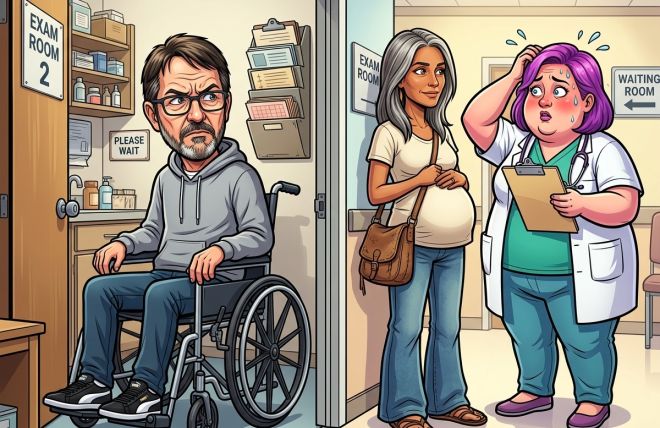
In wobbled a poor, grossly overweight woman wearing a crisp white doctor’s coat.
I naturally assumed this was my attending physician. As she moved closer, it was painfully clear that this poor lady was suffering immensely herself; she was visibly struggling with some severe form of chronic physical ailment, marked by advanced psoriasis and what appeared to be the heavy, swollen limbs of elephantiasis.
After a brief, strained greeting, she leaned in close to listen to my heart.
It was an immediate sensory overload, and not in a good way. The air grew thick with a bizarre, nauseating combination: she smelled faintly of hotdog water, desperately masked by an overpowering cloud of eye-burning, cheap perfume. (I promise you, the specific scent of that perfume will become agonizingly relevant later in my journey, long after I finally received my true diagnosis.)
Thank goodness she didn’t touch me a moment longer than absolutely necessary.
As the physical exam wrapped up, the atmosphere in the tiny room grew tense. Even the staff could clearly sense how deeply uncomfortable I appeared to be. Because of that palpable discomfort, the rest of the appointment went by in a rushed blur.
Before she could dismiss me, I managed to get a direct question in. I wanted to know where we stood. I asked her if she would be my attending physician for every subsequent visit moving forward.
She confirmed, with a nod, that she would indeed be my primary contact at this facility. But then, she casually dropped a bombshell piece of information that stopped me cold.
She informed me that she was not a doctor.
In fact, the actual doctor whose name I had chosen from the insurance list, the physician I supposedly booked this appointment with, wasn't even in that office today. In reality, that primary care doctor was only physically present at this specific location one day a week, spending the rest of their time rotating through a handful of entirely different offices across the region.
This woman standing before me in the hotdog-water-and-perfume haze was a Physician's Assistant (PA). And she gently let me know that it was entirely unlikely I would ever actually lay eyes on the real doctor in this office.
The bait and switch was complete. I had jumped through every administrative hoop, suffered the physical toll of preparation, paid into a punishing insurance deductible, and sat in a germ-filled industrial box—all to see a substitute provider who had no deep investment in my ongoing care.
At the very least, she didn't hit me with any brand-new, wildly speculative guess diagnoses. Looking over my newly formed medical records, she saw that my former doctor had been heavily leaning toward an MS diagnosis. Reading between the lines, this PA must have simply assumed that we were marching down a predetermined path, seamlessly picking up right where the last physician left off.
"Next stop," she said smoothly, closing the file. "Neurologist."
I walked out of that office feeling more hollow than when I walked in. I had a referral, yes. I had a destination. But as I stepped back out into the harsh daylight, swallowed up by the sprawling parking lot, a chilling certainty settled over my mind.
The real battle hadn't even begun yet, and the system wasn't designed to save me—it was designed to wear me down.
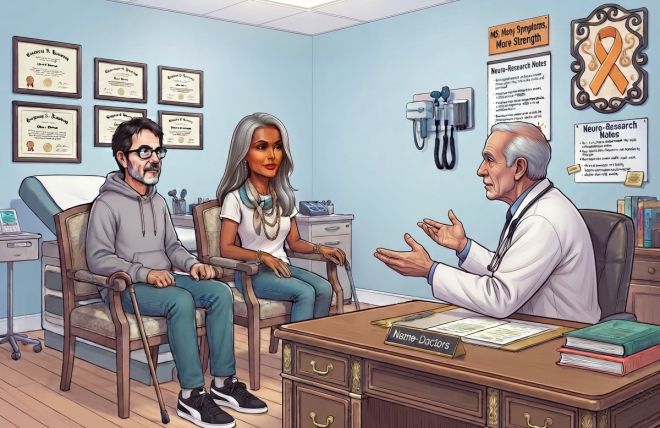
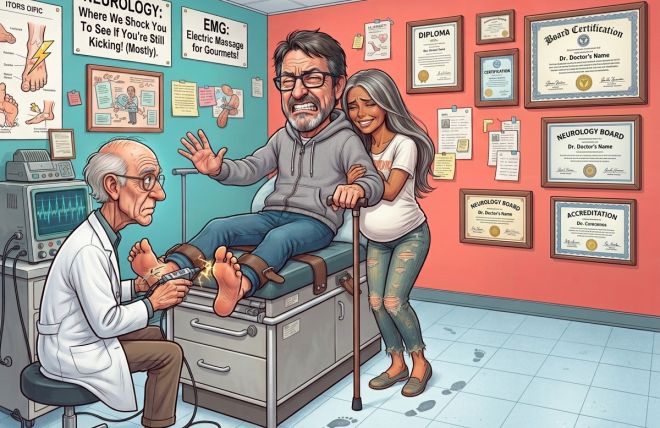
What lies behind the closed doors of the neurology department? Will the specialists finally provide the answers I've been desperately seeking for over two years, or is another twist waiting in the shadows? Subscribe and follow along as I continue uncovering the unsettling truths of my medical journey.