The Electric Chair: Surviving the EMG and the Shadows of a Long Diagnosis

Next, off to the electric chair.
I won't bore you with the in-between, the endless waiting. Hurry up and wait for the next appointment. Next up: the EMG. The usual prep time was required. I even waited to recover from the last disaster of an MRI appointment. Here we are, another month gone by, and now I'm approaching three years since my first symptom, with eight months of that spent on the exhausting journey just to get a diagnosis.
I really don’t walk much anymore. I can manage if I’m pushing a shopping cart, but I’ve finally given in and started using the offered wheelchairs at my appointments. My speech is almost down to a mere mumble and moan.
So, it was the big day. I didn’t quite know what to expect, but I was as prepared as I possibly could be. After my last experience with the MRI, my wife decided it would be best for her to be by my side for this one. Thank God she was.
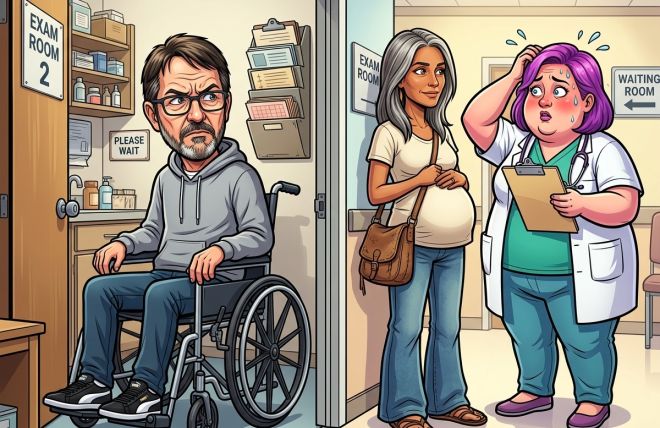
This time, it was back to the neurologist’s office. The ladies there were so genuinely nice. Let me make this clear: whenever I complain about the experience, it has nothing to do with how kind and supportive the staff was to me. My problem is that they do everything they can, which ultimately ends up being nothing. They are just doing their job, following the protocol, and I am just the next appointment on the list. Another name, another file, another body to test.
Skipping the details, I was rolled into the room and managed the difficult transfer from the wheelchair to the exam table. The lead-up is a little foggy in my mind now—this was fifteen years ago, after all, but the memory of the physical sensation hasn't faded one bit.
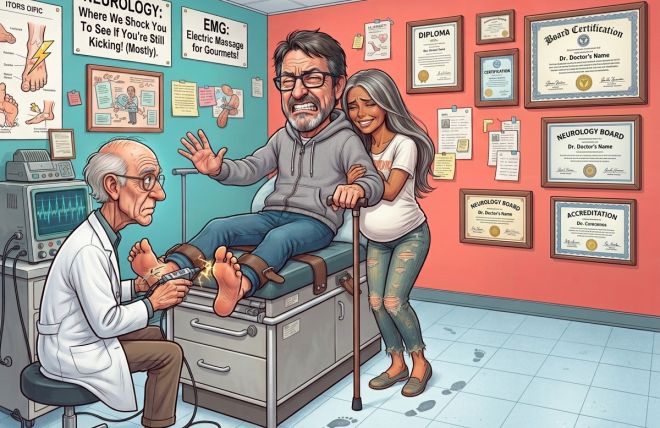
They stuck electrodes to me, and the test was about to begin. Then, the doctor started sticking this needle-like probe all over my body.
The first prick was intensely uncomfortable. It was agonizingly sharp, making my muscle seize up instantly, rendering it sore in a matter of seconds. The testing continued, feeling less like a medical diagnostic procedure and more like a medieval torture session involving electric shocks. I remember thinking to myself, This must be what being waterboarded is like. I had to completely dissociate, to tune my mind out just to endure the duration of the test.
Finally, it was over, but every single muscle in my entire body was feeling the aftermath. I was sore all over, carrying a deep, heavy ache that radiated from my core to my extremities. I don’t really remember much about the tail-end of the appointment because I was entirely consumed by trying to keep myself together and processing what the hell I had just experienced.
I was, without a shadow of a doubt, weaker. I could barely transfer myself back from the table to the chair. Luckily, my wife was with me; I would not have been able to get home alone.
The Aftermath: Did the Test Trigger a Decline?
Why was this appointment so uniquely traumatic? Looking back, I believe it came down to timing. I was already nearly three years out from my very first symptom. I firmly believe that the trauma of the EMG acted as a harsh physical trigger, accelerating my bodily decline. My system simply could not bounce back and recover like a normal, healthy person’s would—or even like someone who undergoes this testing immediately after their first symptom appears.
If you’ve been following along with my story, you might notice I’ve never mentioned twitching before. I didn’t actually have the symptom of twitching for the first three years. Previously, when I got cold or stressed, my entire body would shake uncontrollably. It felt like I was freezing, shivering violently, mimicking something closer to a seizure.
But after the EMG, it was different. That used to be a whole-body phenomenon. Now, it was localized and erratic. Individual muscles would just start twitching like crazy on their own accord. It felt as though every single muscle they had tested with that wretched probe now had a mind of its own.
The Mental Toll
I left that appointment carrying a tangible decline, and that regression steadily worsened over the following few weeks. I was forced to lay in bed for days, utterly weakened and rapidly losing hope.
Up until this point, the battle had been physical. But the rapid decline following the EMG pushed the struggle into my mind. It was a psychological breaking point—something I could no longer ignore, push past, or brush under the rug. The darkness was closing in, and the mental weight was heavy enough to crush whatever resilience I had left.
The tests were done. The damage, it seemed, was set in motion.
Stay tuned for what comes next.