A Little Bit of Trauma Goes a Long Way: The Bizarre Journey That Led to My ALS Diagnosis

They say a little bit of trauma goes a long way. I used to think that was just a cliché people tossed around to make light of a bad day. But looking back, I realize that a single, overwhelming night changed the trajectory of my entire life.
Let me take you back.
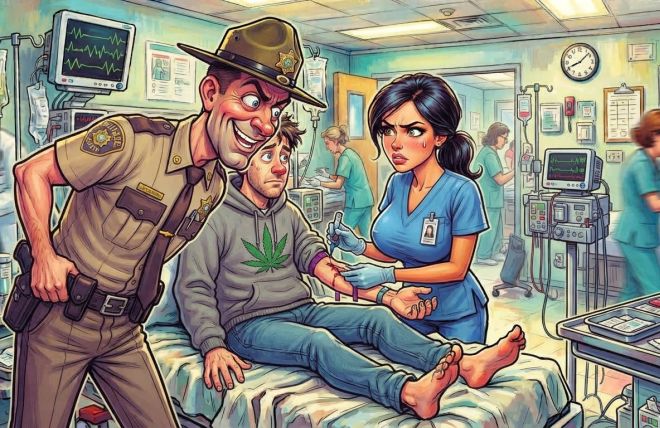
I was already completely exhausted from a long, grueling day of work when the red and blue lights flashed in my rearview mirror. I got pulled over. It was a stressful ordeal, to put it mildly. But by the time the whole ordeal wrapped up and I finally arrived home at 5:00 in the morning, ten hours later, I was nearly dead on my feet.
I slept for two days. Literally. I woke up 48 hours later.
See, that was my normal baseline for a while. Whenever I would work hard, go on a big adventure, deal with a stressful situation, or experience a traumatic event, it took a massive toll on my body. I would be so utterly depleted that it required a full day or two just to recover my energy. But that specific night? Talk about a traumatic event. It’s etched into my brain, and I’ll remember it for the rest of my life.
I think this is precisely where my story takes a sharp, unexpected turn.
A few weeks later, I received the letter in the mail regarding the stop. I wasn’t worried in the least. I knew for a fact I wasn’t driving while intoxicated, so I was genuinely looking forward to reading the official dismissal of this horrible experience.
To my utter shock and disbelief, I wasn't let off the hook. I was charged with Driving Under the Influence of marijuana.
Let that sink in. I hadn't even smoked that day. And honestly, even on the days I did smoke, my tolerance was so high that it would take a boatload to actually impair me. I had been doing this my whole adult life. But, of course, I knew the reality of the science: marijuana stays in your system for up to 30 days from just one single toke. With statistics like that, there was zero chance I was passing a drug test in this lifetime.
I knew I needed to prove that something else was fundamentally wrong with my body, that it wasn't me being "too high," but that my motor skills and reactions were failing me for an entirely different reason. Little did I know, this ridiculous traffic stop was the catalyst for my journey toward being diagnosed with Bulbar ALS.
Breaking a 20-Year Streak
I had dreaded doctors and actively avoided them for over 20 years up until this point. I owned my own business my whole life and never worked for another company. If you’re self-employed, you already know that health insurance is astronomically expensive.
The last time I saw a doctor was over two decades ago, back in the era when a family doctor treated your whole family and had actually been there at my birth. Back then, medicine felt human. But when I called around for my first appointment in two decades, nobody asked what was wrong with me. The script was identical everywhere: "Name? Insurance provider?" It’s crazy. When I told them I pay cash, several doctors flat-out refused to see me.
Let’s keep in mind: by this point, I was nearly two years out from experiencing my very first symptom.
I finally found a family practice doctor who would accept a self-pay patient with no insurance. And I think it’s an important detail to retain for later in my story: I had no insurance. Paying cash to see the doctor became a massive hurdle during my diagnostic process.
(Footnote: I wasn't avoiding the doctor because I didn't have insurance. I wasn't avoiding the doctor at all, really. It just wasn't my thing.)
The Body Fails
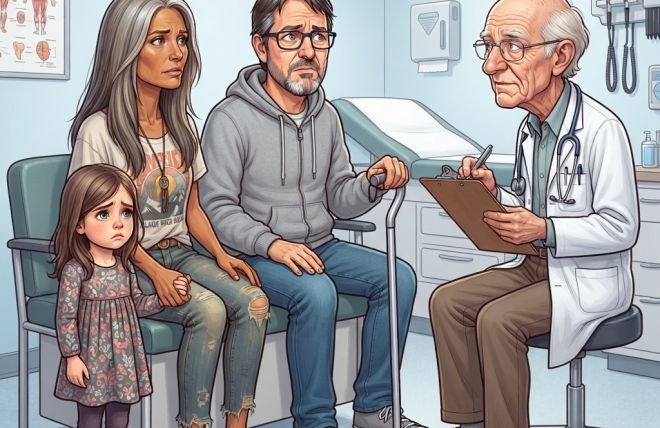
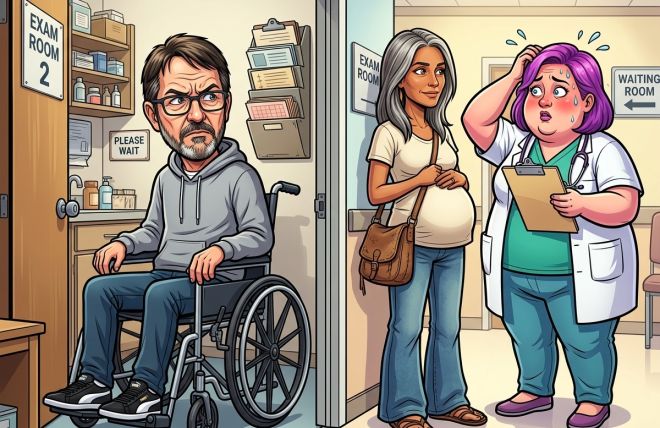
My first appointment was finally scheduled. In a few weeks, I’d be heading into the clinic to figure out what the hell was wrong with me.
Take a look at my condition at that exact moment in time: Why was my balance so consistently off? Why was I mumbling and talking so slowly? Why did I get exhausted so frequently, needing days to recover from a single outing? Why was I constantly short of breath? So much was going wrong with my body, yet I had never even bothered to put it on a list up until then.
As the appointment date approached, it felt like my symptoms became amplified, turning up the volume on a body that was quietly breaking down.
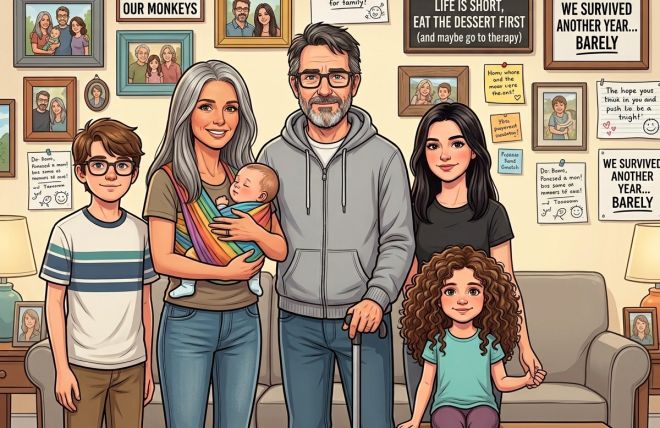
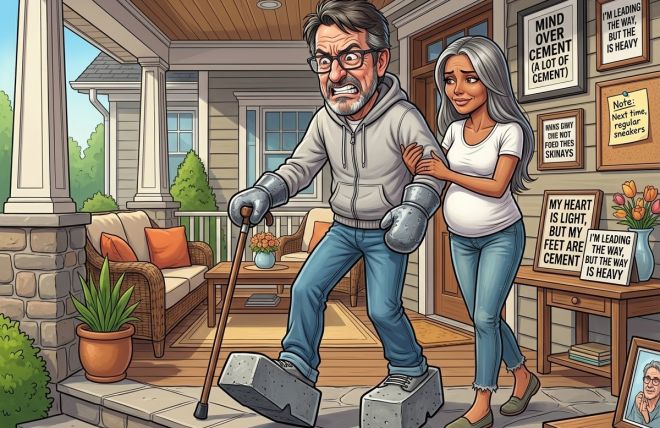
To walk, I needed to lean on something, usually my fiancée’s hand. One day, while we were walking through the grocery store, my stepdaughter thought it was hilarious to drop a walking cane into our shopping cart. We ended up buying that cane. Quickly, it became an intricate, indispensable part of my daily mobility.
My speech, too, was severely limited. I could answer direct questions, but holding an actual conversation was nearly impossible. Though, to be fair, maybe that was also because my fiancée literally never shut up. I couldn't get a word in edgewise even on the days when my voice was working!
We laughed about the cane. We joked about the talking. We tried to keep life normal.
Now, tomorrow is the day of the appointment...